
Electric Insulators
Electrical insulators used in the steelmaking industry serve primarily to isolate mechanical components that carry high-current electricity, thereby preventing short circuits between these parts. Key characteristics of such insulators include high compressive mechanical strength, thermal resistance compatible with the temperatures found in electric arc furnace components, and long-term stability of their physical and chemical properties.
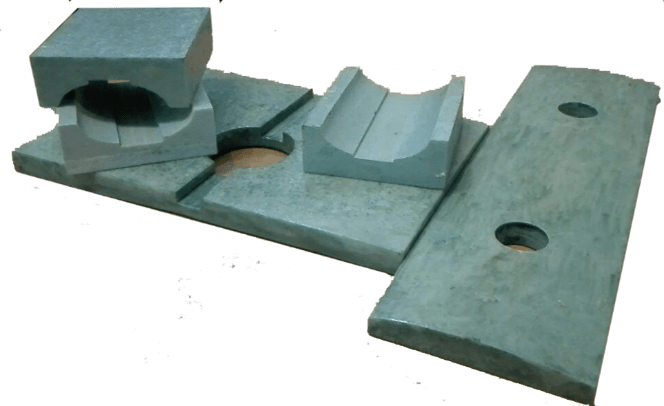
In electric arc furnaces, these insulating materials are employed in various components—such as the insulating sheets between the lifting column and the electrode arm, the graphite electrode clamp assemblies, and parts of the secondary circuit—with each application requiring a specific type of insulation. For instance, mica-based insulation is used in areas subject to extremely high temperatures, while fiberglass-based materials of various grades are utilized where high mechanical strength is required. Depending on the intended application, these insulators can be manufactured in diverse shapes and machined to precise specifications.
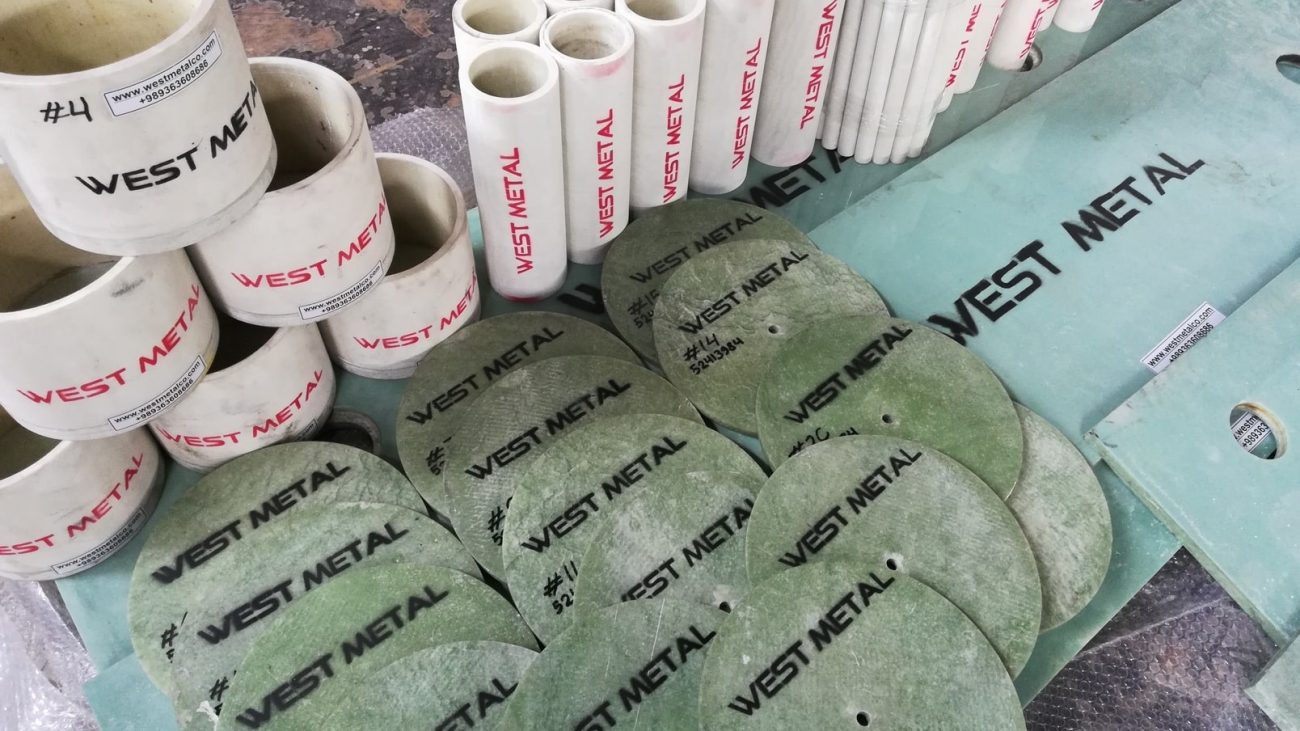
Mica: Key properties of mica include high-temperature tolerance, excellent resistance to flammability, high insulation resistance and dielectric properties, good mechanical strength and flexural resistance, resistance to moisture absorption (in its synthesized form), and high resistance to oxidation. Other forms of mica-based materials are produced by layering mica paper with silicone or epoxy resins, processed under high pressure and specific temperatures. The technical and physical specifications of our company’s mica sheets are presented in the table below.
MICA | Standard | Unit | Standard |
Density | IEC 371-2 | Gr /Cm3 | 2.1-2.25 |
| Flexural Strength | ISO 178 | Mpa | 230 ≥ |
mpressive Strength | ISO 604 | Mpa | 400 ≥ |
electric Strength | IEC 243 | Kv/mm | >25 |
Insulation Resistance | IEC 93 | M-ohm | 200-600 |
Thermal Resistance | DIN 53516 | Peak ° C | 500-800 |
Weight Loss | IEC 371-2 | % For 4h | <1 |
Water Absorption | ISO 62 | %After 24h | <0.5 |
Fiberglass is a category of composite materials composed of glass fibers and a thermoset resin. Glass fibers serve as the structural base (matrix) of these composites; depending on their arrangement, they are classified into two types: woven glass fibers and randomly oriented (non-woven) glass fibers. Fiberglass sheets are produced by layering glass fibers and subjecting them to heat and pressure, resulting in sheets of varying dimensions and thicknesses. Once manufactured, these sheets can undergo various machining processes to achieve specific shapes and dimensions. The specifications of these five types of fiberglass materials, along with their differences in terms of various parameters and applications, are detailed in the accompanying table.
Fibergalss | Unit | G7 | FR4 | G11 |
Base: Wowen Glas Fibers | ||||
Epoxy Type | - | Normal | Fire Resistant | High Tempreture |
Color | - | Light Green | Light Green | Amber |
Density | Kg/m3 | 1800 | 1850 | 1800 |
Flexural Strength | MPa | 275 | 275 | 275 |
Bending Strength | MPa | 380 | 380 | 380 |
Hardness | Rockwell M | 111 | 110 | 112 |
Temperatur Tolerance | oC | 140 | 140 | 180 |
Electric Strength | KV/mm | 18 | 18 | 18 |
Water Absorbtion | % | 0.25 | 0.25 | 0.25 |