
WATER COOLED CABLES
A water-cooled cable is a device that cools the cable by circulating water. It is mainly used for cooling high-power equipment. A water-cooled cable contains an inner conductor and an outer insulation layer, and water flows through the water pipes in it for cooling.
Water-cooled cables are mainly used for high-power electrical equipment, such as equipment with high-power motors or inverters, common electric arc furnaces, and welding machines. They are also used in petrochemical, metallurgical, pharmaceutical, and other high-temperature industries. EAF/SAF Water-cooled cables can protect equipment from damage under high loads and extreme working conditions.
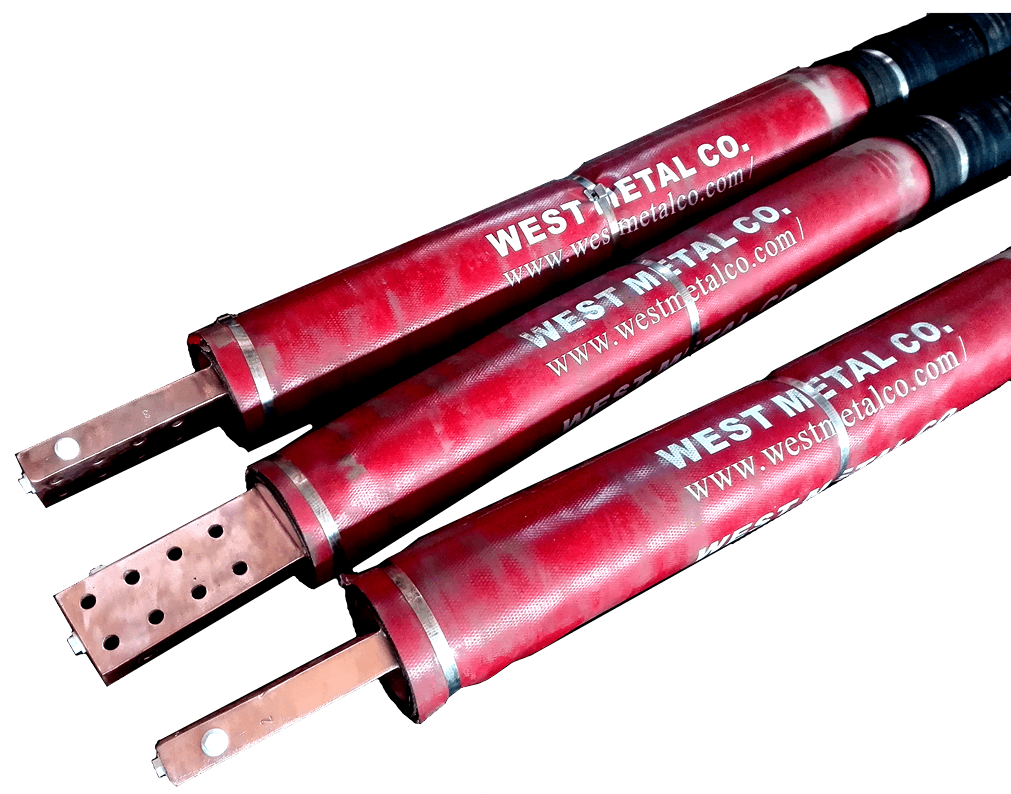
For over two decades, cables manufactured by the WEST METAL company have been used in steelmaking plants—such as Khuzestan Steel (KSC), Mobarakeh Steel (MSCO), Yazd Alloy Steel, Iran National Steel Group (INSIG), Pasargad Steel Complex (PASCO), Hormozgan Steel, and Kaveh Kish Steel (SKS)—as well as in various other companies within the steel industry.
Advantages of Water-Cooled Cables from WEST METAL Company
There are no limitations regarding the size, capacity, or shape of the cables; they can be designed and manufactured according to the requirements of the requesting unit. Furthermore:
These types of cables are designed and manufactured with two types of terminals: fixed and rotating. A rotating terminal head exerts less mechanical stress on the cable.
The repairability of water-cooled cables—which includes replacing damaged sections with new components—extends the cables' service life and reduces costs.
During the operation of certain furnaces, significant vibration and movement occur; therefore, to prevent damage to the cables, two different types of rubber shock absorbers are installed on them.
Depending on the applicant's requirements, they are produced in two types: mechanical press-fit and hard-soldered. The hard-soldered type allows for repair, while the press-fit type is suitable for environments with high levels of vibration.
Durable materials are used in the production of these cables. Pre-delivery tests—including checks for electrical conductivity, leakage, and flexibility—guarantee that the cables function correctly.
A special silicone coating is used to prevent hazards resulting from radiant heat from molten material or the splashing of molten particles.